
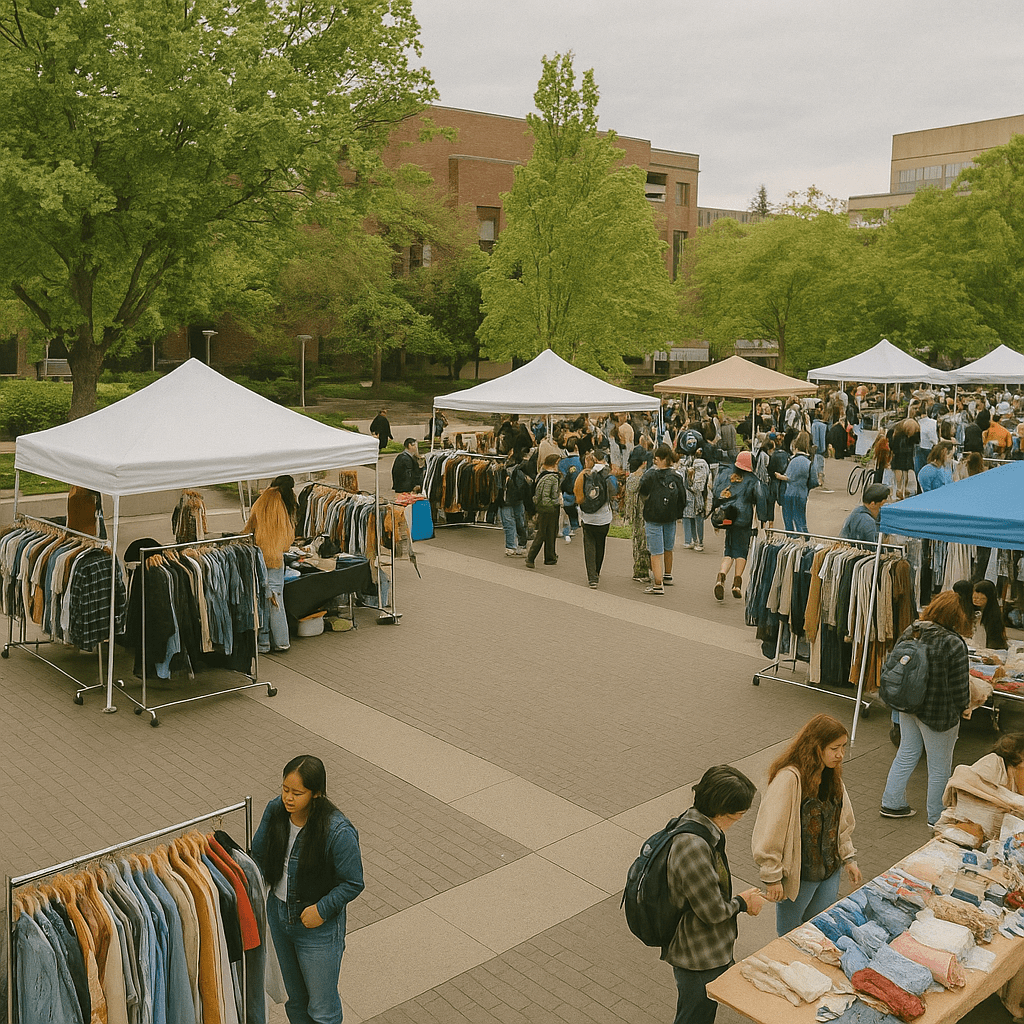
It’s no secret that TikTok has revolutionized how we discover, engage with, and consume fashion. Scroll through the app for five minutes, and you’re bound to come across a haul, a micro-trend tutorial, or an aesthetic get-ready-with-me. While this content often inspires creativity and self-expression, it also fuels a cycle of overconsumption that’s become deeply normalized, especially among Gen Z.
Sustainable Style Finds a home at the uO Flea Market
In response to this fast-paced fashion culture, a more sustainable and intentional alternative has emerged right here at the University of Oregon, the UO Flea Market. This student-run event brings together secondhand sellers, local creatives, and fashion lovers to shop sustainably, connect with the community, and support small businesses.
Where it Began
Launched in Fall 2024 by founder Colin Baloun and co-founder Olivia Roberts, the UO Flea Market was influenced by Baloun’s background in reselling and his vision to make entrepreneurship more accessible. After competing in the OIC, Oregon Innovation Challenge, Baloun became a finalist and received an investment that enabled him to create the UO Flea Market. Following this, he brought co-founder Roberts and the two began to strategize the best way to reach as many people and build the market. And that is where Ailsa Huerta, Director of Marketing and Media, comes in.
The Intersection of TikTok, Sustainability, and Secondhand Culture
To learn more about the intersection of TikTok, sustainability, and secondhand culture, I spoke with Ailsa Huerta, the Director of Marketing and Media at the UO Flea Market. In our conversation, Ailsa reflects on how TikTok glamorizes overconsumption, what’s fueling today’s hyper-speed trend cycles, and how creators can promote sustainable fashion without feeding into the very habits they hope to change.
We began by talking about her relationship with the app and how she engages with fashion content online. Huerta explained that she primarily uses TikTok and Instagram as a consumer. Much of the fashion content she watches is not strictly fashion-focused, instead, she’s drawn to creators who live interesting, inspiring lifestyles, and whose style naturally reflects that. For her, it’s less about curated hauls and more about authentic, everyday fashion that emerges from how people live their lives.
When she thinks about TikTok fashion, the first thing that comes to mind is big hauls. “Especially a lot of Shein hauls and overconsumption of goods being normalized in media. There has been a need to consume that has been pushed on all of us as a generation,” said Huerta.
In my opinion, this is the kind of mindset the UO Flea Market aims to challenge. By offering a space where secondhand fashion is celebrated and sustainability is central, the flea market provides a refreshing alternative to the constant pressure to buy new. It’s a tangible example of how students are pushing back against fast fashion culture and choosing more intentional, community-driven ways to engage with style.
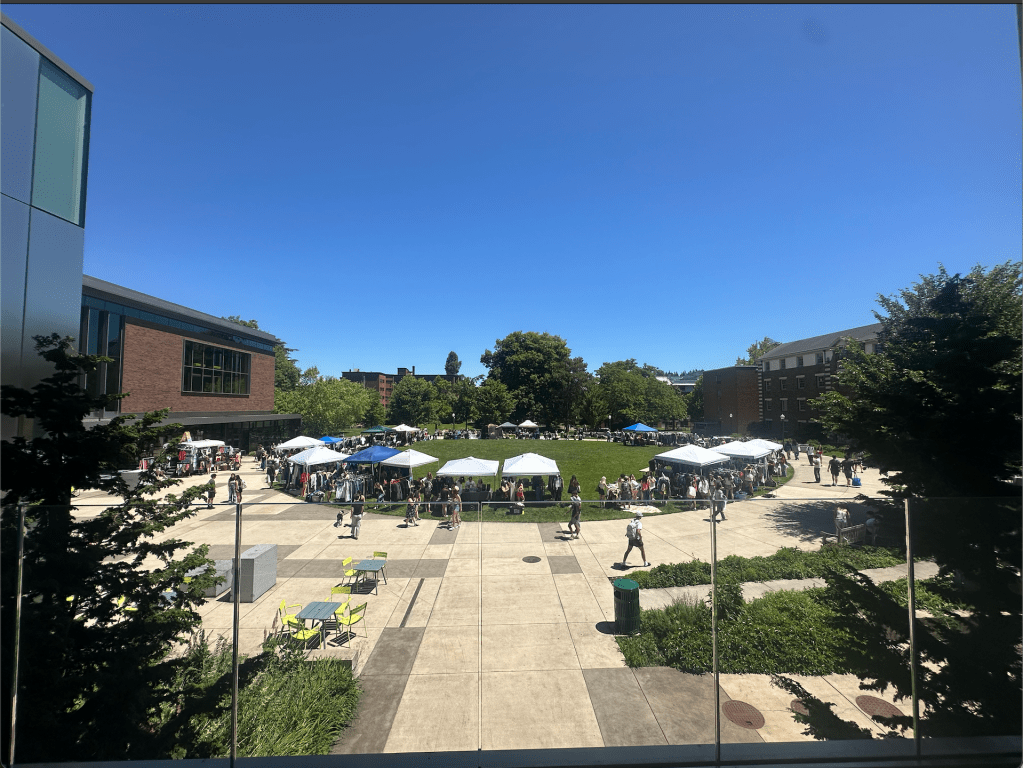
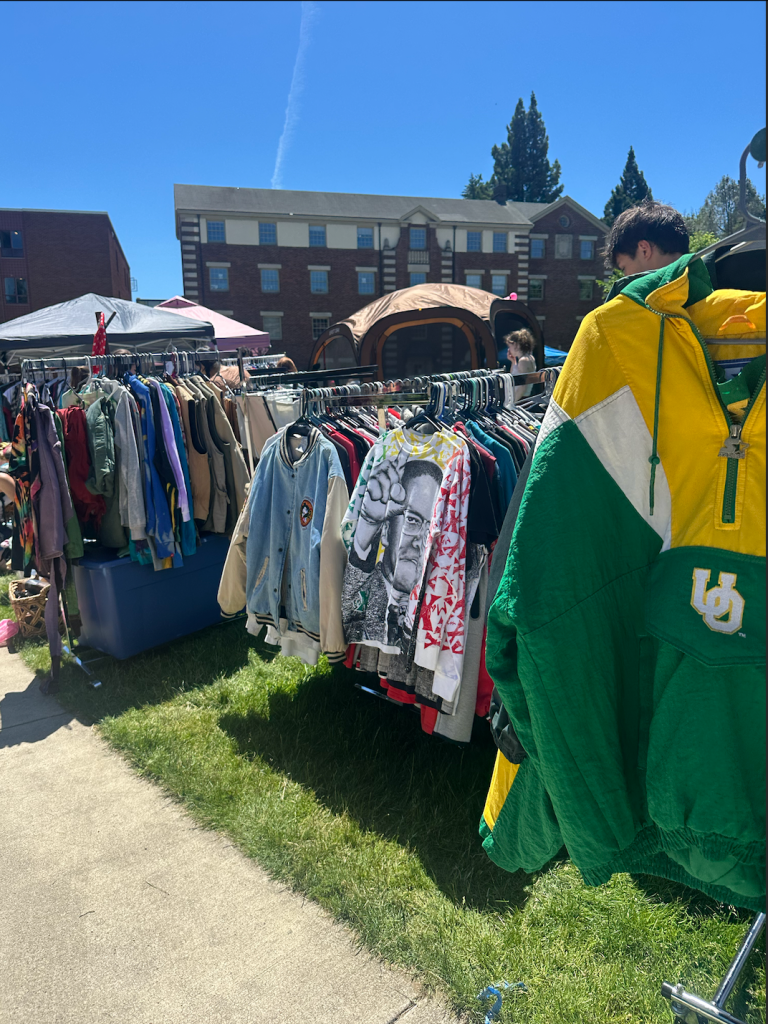
Today, May 30th, 2025, I attended the UO Flea Market and it was a perfect reflection of that mission. The atmosphere was vibrant and welcoming, with a lot of student-run booths showcasing everything from vintage denim and graphic tees to handmade accessories and reworked pieces. Each vendor has a story, a vision, and a passion for fashion. Shoppers moved from booth to booth, not just to find great deals, but to connect with the sellers, with their peers, and with a larger purpose.
As secondhand shopping continues to gain popularity, I asked Huerta whether she thinks TikTok has played a role in making thrifting more mainstream and how she’s seen that shift take place.
Huerta believes TikTok and other social media platforms have played a major role in making thrifting and secondhand shopping more mainstream. Growing up, she often went thrifting with her mom but remembers a time when it carried a stigma, people saw it as “dirty” or undesirable. Now, she sees a clear shift in attitude. “Social media has definitely been able to draw out the great aspects of thrifting and sustainability,” she said, emphasizing how the focus has shifted toward finding unique pieces and making eco-conscious choices. “I’m very grateful for social media, people are embracing it and contributing to something that is better for the planet,” said Huerta.
I agree with Ailsa, I’ve been thrifting ever since I was little, often going to the “Goodwill Bins” with my dad. I would find the coolest toys and clothes, but there was always a judgmental reaction when I told my friends where I got them.

This shift in perception is just one example of how TikTok has influenced shopping habits. I asked Ailsa how she thinks the app has changed the way people shop for fashion.
“Well, I know for some people TikTok has made it maybe a little more accessible in a way, especially with TikTok Shop. I know a lot of people who buy off of that. I personally don’t,” she said. “The way I interact with TikTok and how it affects my shopping is more about feeling inspired by what I see. Not necessarily jumping to buy what’s on the screen, but kind of just taking in the overall aesthetic or the energy that posts give,” said Huerta.
Huerta’s perspective highlights an important point of while TikTok makes fashion trends incredibly easy to access and purchase, it also has the potential to inspire creativity without encouraging constant consumption. Her take is a reminder that we can engage with fashion content in ways that fuel personal style rather than feed into the fast fashion cycle.
Still, TikTok’s impact on shopping habits is complex, and not always positive. When I asked Ailsa whether she thinks TikTok encourages overconsumption, her response was clear: “For sure, I think that TikTok definitely contributes to the push for overconsumption.” She mentioned the nonstop stream of videos showcasing clothing hauls and trend-based purchases. “There’s a constant influx of videos showing all of these things people got, and I think that can sometimes make someone feel like they need more, or that what they have isn’t enough,” she explained. “There’s this constant need for something that’s out of reach.”
(Include a TikTok video of a haul)
Beyond the content itself, Ailsa called attention to the role of the algorithm. “If the algorithm recognizes that you really like a specific type of content,say, haul videos, it’s constantly going to push that out on your page, making you think that’s kind of normal,” she said. And once that kind of behavior feels normalized, it becomes easy to fall into the trap of wanting to keep up.
Her insight emphasizes how TikTok’s design can subtly shift our perception of what’s enough, and why it’s so important to stay mindful of the content we consume and how it shapes our habits.
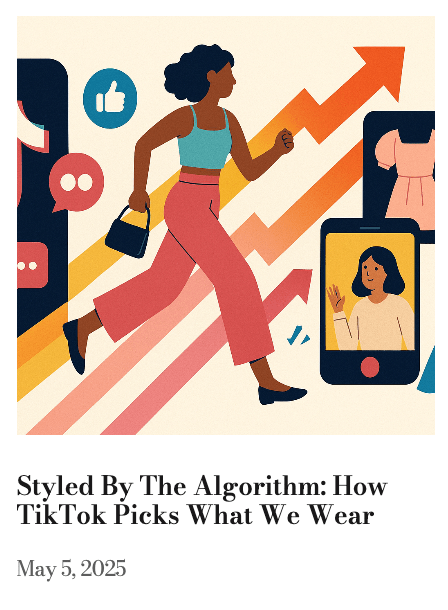
I talked in depth about TikTok’s algorithm in my blog post “Styled by the Algorithm: How TikTok Picks What We Wear”
To close, I asked what advice she’d give to consumers trying to shop responsibly while still enjoying fashion on TikTok. Her response: “Take a little inspiration from trends, but ultimately tap into what it is that you really love and what makes you feel confident and happy. Use thrifting to fulfill that and build your inner self.”
In a digital world overflowing with trends, Ailsa’s approach offers a grounded, thoughtful alternative, one that embraces personal style, sustainability, and the joy of finding something truly your own.
My Personal Experience
I’ve been following the UO Flea Market since the fall, attending every event and shopping for myself along the way. As someone who’s always loved thrifting, the flea market quickly became one of my favorite events on campus. It’s more than just a shopping event; each market feels like a gathering of a community that shares the same passion for fashion, sustainability, and self-expression as I do. I genuinely look forward to each one, not only for the chance to find unique pieces, but also to support the student vendors and the mission behind the UO Flea Market. It’s inspiring to see a movement like this take root on campus, and I’m proud to be a small part of it.
Back in 2023, during my freshman year, there was nothing quite like the UO Flea Market on campus. At the time, I would occasionally see individual vendors set up outside the Erb Memorial Student Union with racks of clothes, doing their best to sell secondhand pieces to passing students. While those pop-ups had charm and potential, they lacked the structure and visibility that something like the flea market now provides. Seeing how the UO Flea Market has grown into a consistent, organized, and well-supported event has been exciting, not just as a shopper, but as someone who values sustainable fashion and student entrepreneurship. It’s amazing to witness how far the secondhand scene has come in just a year, and how it’s created a true sense of community around thrifting and creative expression.
To End Off
As trend cycles continue to speed up and overconsumption becomes increasingly normalized online, spaces like the UO Flea Market serve as a powerful reminder that fashion does not have to come at the expense of the planet, or our individuality.
Ailsa’s words, along with the energy and passion behind the flea market itself, reflects a growing movement that prioritizes creativity over consumption. Whether you’re curating a unique wardrobe, supporting local vendors, or simply resisting the pressure to keep up with every TikTok trend, it’s clear that fashion can be a force for good.
And here at the University of Oregon, it already is.
If you’re ever in the Eugene, OR area, visit a UO Flea Market event. They’re incredible, and you can find more information about upcoming events on their Instagram.

 For You Fashion
Leave a comment